 (360) 518-0254Dispatcher 7 AM – 7 PM · AI after hours
Commercial Kitchen & Refrigeration Repair in Portland & Vancouver
No surprise feesYour OK firstNo call center
One call for the whole back of house: walk-ins, reach-ins and prep tables, ice machines, fryers, ranges and ovens, dish machines. Book in about a minute. Same day for most calls before noon, so the line stays open. $99 diagnostic, waived when we do the repair.
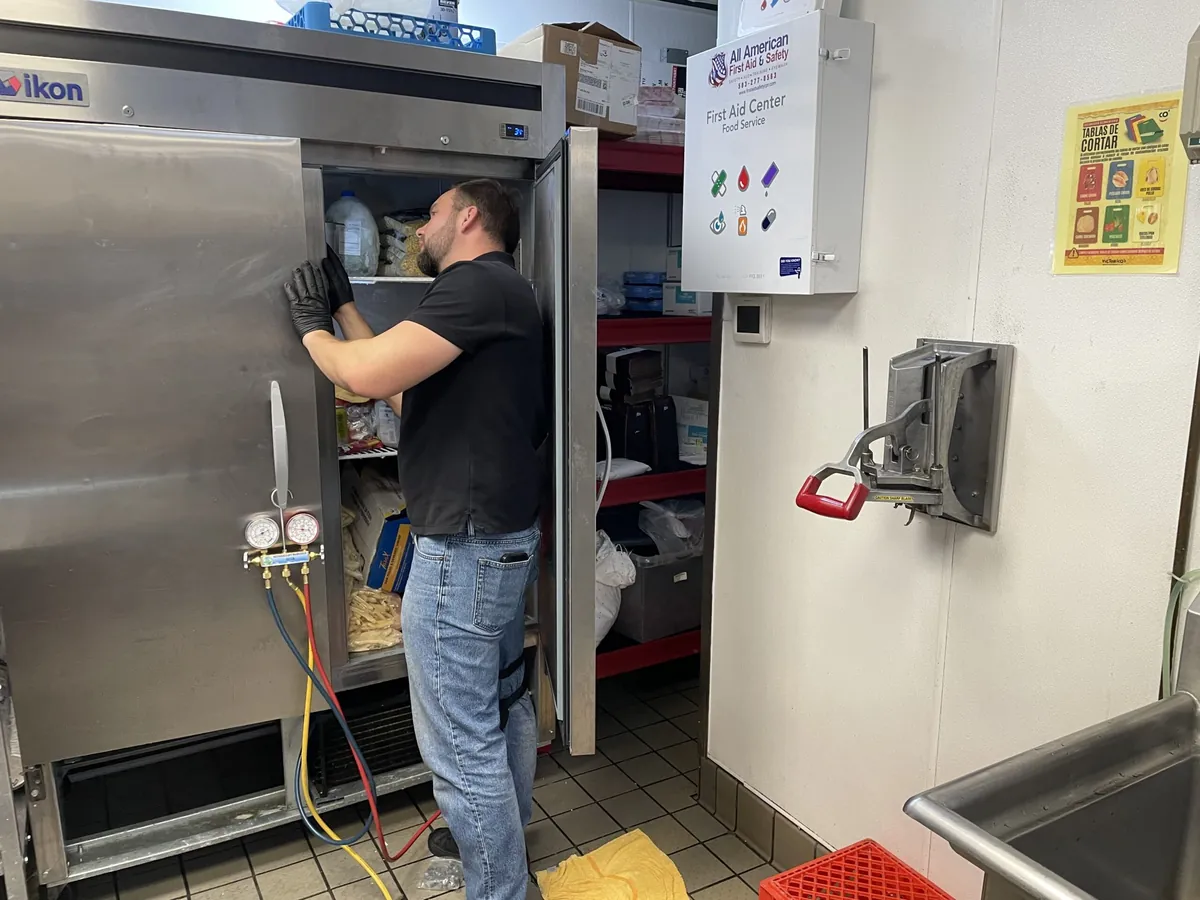
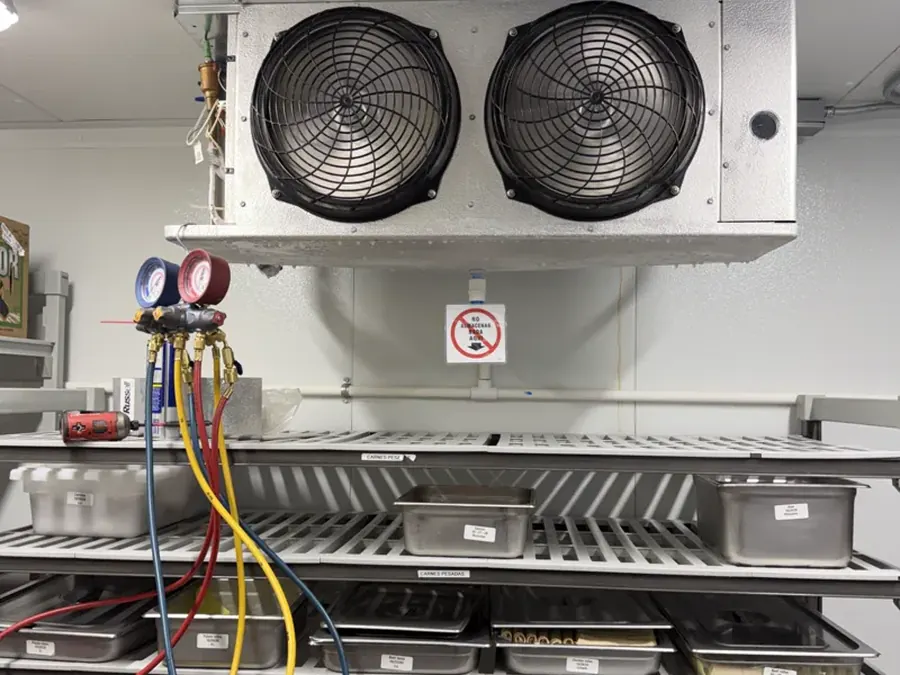
Product on a clock, and an inspector's thermometer.
Washington and Oregon food rules both hold cold food at 41°F or below. A walk-in that drifts above it is not a maintenance item, it is tonight's inventory and this month's inspection.
Sources: WAC 246-215-03525; OAR 333-150-0000, which adopts the FDA Food Code; Vixxo, December 2025. Your county health department applies the state rules.
What to do while we're on the way
- Log the temperature now and every hour. Inspectors ask for the record, and it tells us how fast the box is losing ground.
- Keep the door shut and move the most expensive product to a working unit if you have one.
- Check the condenser. If the coil is packed with dust or the fan is still, say so when you book; it changes what the technician brings.
- Book the visit. A dispatcher calls back within 15 minutes, 7 AM – 7 PM; after hours our AI receptionist takes the booking and the call-back comes first thing.
Which unit, and what's it doing?
Tap the closest match. It takes you into the booking form with the unit and the problem already filled in; two more questions and a dispatcher calls you back.
Steam table, heated cabinet, bottle cooler, glass chiller, something not listed? Call (360) 518-0254, or start the booking, pick "Something else" and then "Not listed", and tell the dispatcher on the call-back.
How a commercial visit works
No call center, no hourly clock. The same four steps on every job.
Book online any time, day or night, or call. A dispatcher answers 7 AM – 7 PM and our AI receptionist after hours. Same day for most calls before noon.
Licensed, bonded and insured. Based in Camas, across Clark County.Our Portland-side team covers the metro. Gauges on the refrigeration, a meter on the burner, the real cause found, not just a reset.
Then a parts-and-labor price before anything is touched. Say no and the $99 is all you owe.
Approve it and the $99 is waived. 30-day labor warranty, manufacturer's warranty on parts.
The usual commercial-repair headaches, and what we do instead
- "We can get someone out Thursday" while the walk-in climbs past 41°FSame day for most calls before noon, 7 days a week. Book online at 2 AM and the request is already in the queue.
- A trip charge just for showing up, then an hourly clock$99 diagnostic, waived with repair, and a written flat-rate quote before the work starts.
- A residential tech guessing at a walk-inTechnicians who work on walk-ins, ice machines, fryers, ovens and dish machines, so one call covers the kitchen instead of four.
- Nobody answers at 9 PM when the temperature alarm goes offBooking open 24/7. A dispatcher 7 AM – 7 PM, our AI receptionist after hours, and a call back first thing.
- Being sold a new unit before anyone looked at the old oneHonest repair-or-replace advice. If the fix is not worth it, we say so, and the $99 is all you pay.

BusinessRate award winner
Clark County's Best of 2026 for appliance repair
BusinessRate ranks local businesses on their Google reviews: lifetime rating, the last 90 days and review quality. For 2026 it named us the Best of 2026 for appliance repair service in Clark County, Washington.
One team for the cold side, the cooking line and the dish pit.
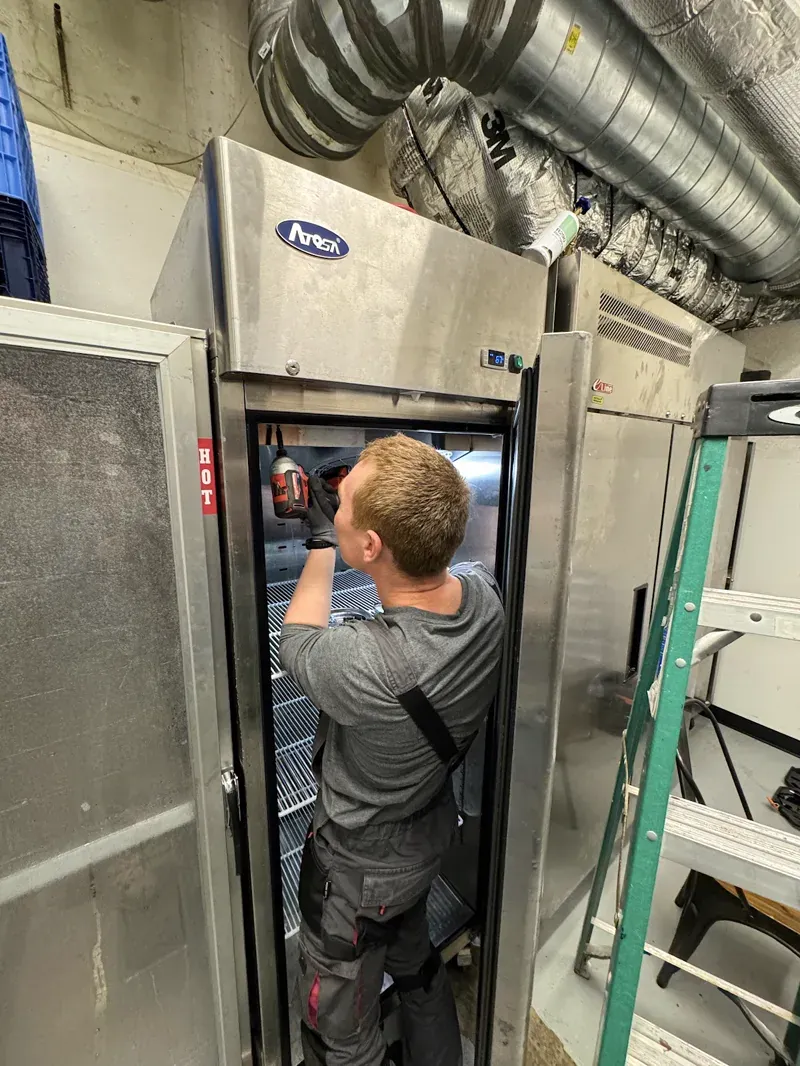
- Walk-in coolers and freezers. Evaporators, condensers, defrost systems, door gaskets, closers and frame heaters, thermostats and controls.
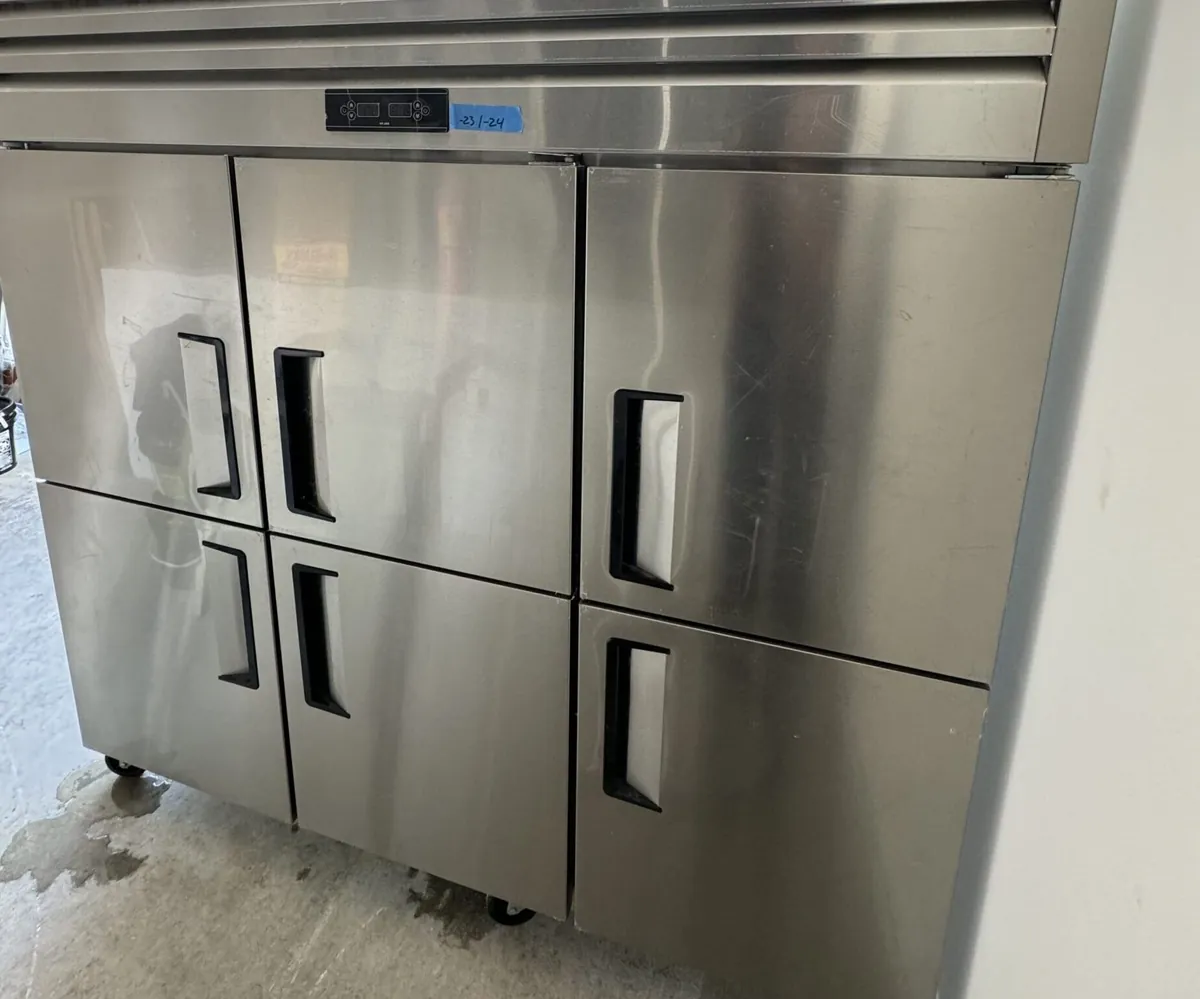
- Reach-ins, prep tables, under-counters, display cases and merchandisers. Repair, and a straight answer when replacement makes more sense.
- Ice machines and ice makers. No ice, low output, dirty ice, leaks and error codes.
- Fryers, ranges, griddles, charbroilers and ovens. Pilots and igniters, thermopiles, thermostats and high-limits, gas valves, elements and convection fans on gas and electric cooking lines, including deck and pizza ovens.
- Commercial dishwashers and booster heaters. Wash and rinse temperatures, fill and drain, wash pumps and door switches on under-counter and door-type machines.
- Back-bar and hot-holding. Bottle coolers, kegerator cabinets, glass chillers and wine coolers on the cooling side; steam tables, warmers and heated holding cabinets.
- Licensed, bonded and insured. Based in Camas, across Clark County.A Portland-side team for the metro. Commercial laundry equipment and anything not listed: ask the dispatcher with the make and model.
What owners say about their commercial repairs
Pulled from our Google reviews, word for word. Names as the customers wrote them.
Very professional and precise in making sure our walk in cooler was working perfect. We really appreciated that they had the availability to work on the weekend and stopping by after fixing to make sure that it was well. Thank you Sergei and team!
I had a fantastic experience with Pacific Appliance Solutions here in Portland, OR. We took a chance on some ice maker machines that were out of commission ... They fixed all the machines quickly and now they’re working like new.
Ivan was amazing! He responded quickly and came out fast. He fixed my large industrial frig for a very reasonable price. I will def be using Ivan for all appliance repair in the future. He was professional and punctual! 10 stars if I could!
Technicians on both sides of the river
A Portland-side team and a Camas–Vancouver team, so "same day" means today. Not on the list? Put your ZIP in the booking form and we tell you right away.
Restaurants in Texas: our Austin team has its own pages, starting at appliance repair in Austin, TX.
Oregon
- Portland
- Beaverton
- Troutdale
- Fairview
Elsewhere in the metro? Put your ZIP in the form; the dispatcher confirms on the call-back.
Washington
- Vancouver
- Camas
- Washougal
- Battle Ground
- Ridgefield
- Salmon Creek
- Hazel Dell
- Brush Prairie
- La Center
- Woodland
- Felida
- Hockinson
Questions owners ask before booking
Fryers, dish machines, ice, walk-ins and the health inspector: what kitchen owners ask before booking.
The pilot on our fryer lights, but it goes out as soon as the knob is released. What is failing?
Almost always the thermopile, the small probe that sits in the pilot flame and generates the tiny current that holds the gas valve open. When it weakens, the valve closes as soon as your hand comes off the knob, which is exactly what you are seeing. A pilot flame that is lazy or yellow because the pilot orifice is dirty starves the thermopile the same way, and a high-limit that has tripped on a fryer that was run low on oil will also refuse to let the burner stay on. Each of those is a routine repair with the price in writing first. Do not wedge the knob or bypass anything to keep the fryer running; the safety that is shutting it off is doing its job.
Our fryer oil is smoking and darkening far too fast, and the dial seems to mean nothing. Is that dangerous or just annoying?
Both, and the dangerous part comes first: oil that keeps climbing past its set point is heading toward its flash point, so turn the fryer off and let it cool rather than cooking through it. The usual cause is a thermostat that has drifted or stuck, so the burner keeps firing after the oil is where it should be; the high-limit is the backstop that is supposed to catch that, and if it has already been bypassed or is also failing, nothing stands between the oil and a fire. A thermostat is a standard part on most fryers, and the technician checks the high-limit at the same visit so you are not relying on one safety that has already shown it can fail.
The dish machine runs, but the final rinse never reaches sanitizing temperature and the gauge sits low. What should I expect at the visit?
A test of the whole hot-water chain, not just the gauge. On a high-temperature machine the final rinse has to arrive at the manifold at about 180°F, which the machine's own booster heater provides; a booster with a failed element, a tripped high-limit or a stuck contactor leaves the rinse at whatever the building supplies, and the gauge tells you so. Scale on the booster's elements and a thermostat that reads low do the same more gradually. The technician checks the incoming water temperature, the booster and the rinse thermostat and quotes the part in writing. If the building's water heater is the weak link rather than the machine, you hear that plainly, since that is a plumber's job and not ours.
Our under-counter dish machine fills slowly and the wash arms barely turn. Is the pump going, or is it the water?
Possibly neither, and the first suspects are cheaper. Slow filling is most often a fill valve screen packed with sediment or a valve that is sticking, and weak wash arms are most often arms whose spray holes are plugged with scale and food, or a wash pump intake fouled with a lemon wedge and a straw. Pull the arms and the scrap screens, clear the holes with a pick, and see whether the pressure comes back. If it does not, the fill valve or the wash pump is the fault and the technician tests both before quoting. Heavy scale throughout the machine is something the technician will point out, and the deliming routine your chemical supplier gives you is what keeps it from coming back.
The pans in the rail of our prep table are warm while the cabinet underneath is cold. Is the table broken?
Usually the rail is being asked to do something it cannot. A refrigerated rail is cooled by air or by a cold plate behind the pans, and it is designed for pans filled to the fill line, under lids when the line is slow, with the air gaps clear. Overfilled pans, product mounded above the rim, a cutting board resting on the pans, or deep pans in a shallow rail all put the top inches of food out of the rail's reach, and a health inspector's probe finds exactly that layer. If the pans are right and the rail is still warm, a rail fan, a blocked air channel or a thermostat is the fault, and because the cabinet below is cold the refrigeration itself is probably sound; the technician confirms that before anything is quoted.
Our deck oven takes forever to recover after each pizza and the back corner never browns. Repair, or is it time for a new oven?
Repair first, almost every time; deck ovens are simple and tough. Slow recovery points at a burner starved of gas or a failed element on an electric deck, a thermostat or thermocouple that reads high so the oven idles cool, or a door that no longer seals and dumps heat with every peel. A cold corner means one burner tube or element in that zone is out, or the deck stone has cracked and shifted. All of those are parts, and the written price comes before any work. The oven becomes a replacement only when the shell or the deck itself has failed, which the technician tells you on the spot.
The steam table will not get the water hot enough to hold food, and the inspector is due. Can that be fixed today?
Book it the same morning and say what the inspector's date is; a call that comes in before noon is usually seen that day. The faults are few: a heating element that has burned out, an infinite switch or thermostat that has failed, or on a wet well a low-water cutoff that is tripping because the well is being run dry. Check the water level first and that the unit is on its own working outlet. The technician tests the element and the control and quotes the part. In the meantime hold product in the oven or a heated cabinet rather than in a well that is not reaching temperature.
Which kitchen problems are yours, and which should go to the hood company, the plumber or the gas utility?
We repair the equipment itself: walk-ins, reach-ins and prep tables, ice machines, fryers, ranges, griddles, charbroilers, ovens, dish machines and booster heaters, back-bar coolers and hot-holding. Everything on the building side of the appliance, from the hood above it to the gas shut-off, the drain and the circuit that feed it, belongs to another trade, and a smell of gas you cannot trace to one appliance is the gas utility's call, after you have cleared the room. When the fault turns out to be on the building side you are told plainly and pointed in the right direction, and the $99 is all you pay.
Will your repair invoice satisfy the health inspector that the unit was fixed?
Ask your county inspector what they want to see; the rules are the state's and each county applies them. What you get from us is a written quote before the work and an invoice afterward that names the unit, the fault and the work done, and if you ask, the technician notes the temperature the unit was holding when they left. Most inspectors also want to see your own temperature log for the hours the unit was out and what you did with the product. Keep that log going until the unit has been holding for a full day; it is the document that shows the problem was handled, more than the invoice is.
There are black specks and a slimy film in our ice bin. Is the ice machine broken?
Not broken, but it is a health problem to stop serving from today. Black specks and slime are mold and biofilm growing in the warm, wet parts of the machine, and the fix is a full takedown: the water system descaled and sanitized, the bin emptied and sanitized, and the parts too far gone replaced. We do that as a separate service with its own fee, quoted in writing before the technician starts, and you can book it on its own or when the inspector says so. What turns a cleaning into a repair is a machine that fouls unusually fast: a condenser fan that has quit so the head runs hot, a harvest that does not finish, or a water system that is not draining between cycles will bring the film back within weeks. Tell the dispatcher when it was last cleaned and the visit is set up for both.
The walk-in door frame is sweating and there is ice building up along the bottom edge. Does that mean the box is failing?
No, it means the door is. Walk-in door frames carry a heater wire that keeps the gasket and the threshold above the dew point so they do not sweat or freeze; when that heater fails, the frame sweats, the gasket freezes to it, and ice grows at the sill until the door no longer closes properly. A door that does not close pulls humid kitchen air into the box, which is how a door problem turns into an iced evaporator and a warm walk-in a few weeks later. The frame heater, the gasket, the sweep and the closer are all replaceable, and fixing the door now is far cheaper than the refrigeration call it prevents.
If a part for our unit has to be ordered, does the kitchen just sit without it?
You find out at the diagnostic, not after. The technician checks whether the part is available before writing the quote, tells you what is in stock locally and what has to come from the maker, and the quote reflects that. While a part is on its way the technician tells you what can safely be done in the meantime: a walk-in may hold with product moved to a working unit and the door kept shut, a fryer with a failed thermostat is simply off until the part arrives, a dish machine can sometimes run while a non-safety part waits. What you will not get is a guess dressed up as a promise about a delivery date we do not control.
I run a franchise location and corporate has to sign off on any repair over a set amount. How does that work with you?
The written quote goes to whoever approves it, and nothing is done until that person says yes. Tell the dispatcher when you book that approval sits with corporate or a facilities office, give the name and number, and the technician's quote is sent there as well as to you; if the approver needs a photo of the unit's data plate or the failed part, say so and it is included. The $99 diagnostic is the only charge until the repair is approved.
We bought used kitchen equipment at an auction for a restaurant that has not opened yet. Can you check it over before we rely on it?
Ask the dispatcher. Tell them how many units there are and what each one is, and the dispatcher tells you whether and how a visit is set up and priced before anything is booked, so there is no surprise on the day. If it goes ahead, the technician runs each unit and checks the things that fail on used equipment, gaskets and door closers, condenser fans, igniters and thermopiles, booster elements, and puts in writing which units are sound, which need a part, and which are not worth repairing. Have the gas, water and power connected before the visit, since a unit that cannot be run cannot be tested.
Walk-in, fryer or dish machine down? Book a visit, often the same day.
Five quick questions, any time, day or night. Or call: a dispatcher picks up 7 AM – 7 PM, our AI receptionist after hours. $99 diagnostic, waived with repair.